Does your POS system truly fit your Food & Beverage business model? 5 use cases to explore

In our previous article on optimizing SmartPOS payments in the Food & Beverage industry, we explored how modern payment technologies are helping businesses improve speed, flexibility, and operational efficiency across the customer journey.
Share this article


However, not all businesses operate in the same way, and choosing the right POS system for Food & Beverage is critical to match different service flows, transaction volumes, and customer expectations.
A fine dining restaurant, a fast-food chain, and a large-scale festival all face completely different operational challenges, and their POS setup needs to reflect that.
Here’s how POS requirements differ across five common Food & Beverage business models.
Different service models require different POS system capabilities
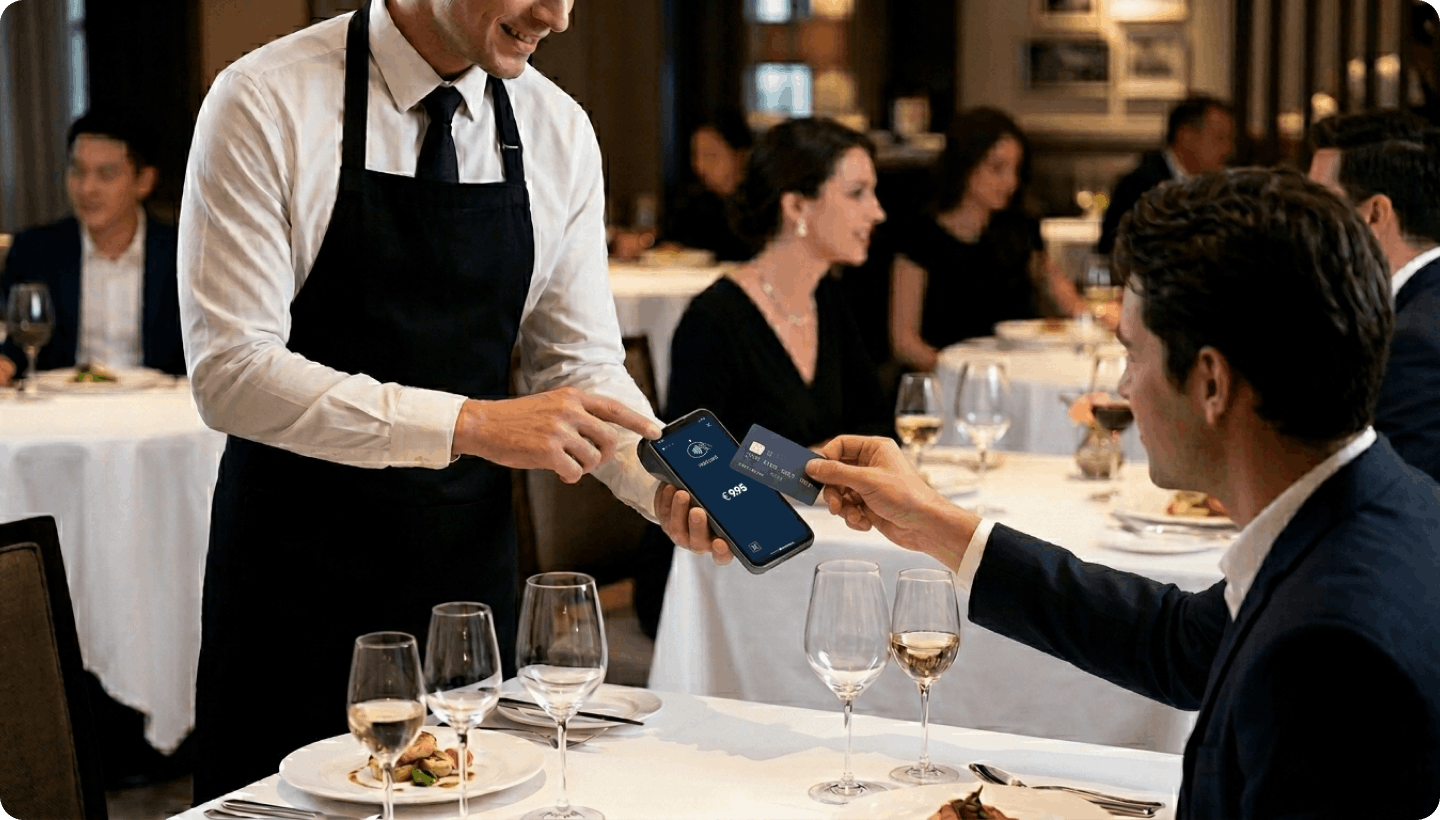
1. Fine dining establishments
Fine dining venues require a POS solution that supports a premium and personalized customer experience with a strong CRM capability while ensuring efficient back-of-house operations. Key requirements include:
- Table management: Efficiently handle reservations, table assignments, and multi-course meals, ensuring smooth service and optimal seating use.
- Customizable orders: Allow for advanced modifications and personalized dining experiences, enhancing guest satisfaction and loyalty.
- Integration with Kitchen Display Systems (KDS): Facilitate clear communication between waitstaff and the kitchen, reducing errors and speeding up service.
- Payment flexibility: Support multiple payment methods, local debit, credit, or more international cards like American Express or even Alipay+ or WeChat to accommodate diverse customer preferences.
- Inventory tracking: Check premium ingredients and wine pairings, ensuring quality control and efficient stock management.
- Customer Relationship Management (CRM): Enable loyalty programs, guest preferences, and VIP tracking, fostering long-term customer relationships and repeat business.
- Staff management: Track shifts, tip pooling, and commission-based earnings, streamlining payroll and enhancing team performance.
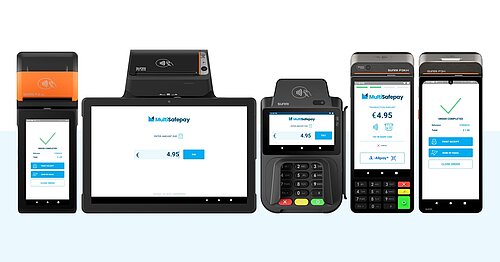
Our recommended terminal: P3 MIX
The P3 MIX is ideal for fine dining environments thanks to its hybrid setup, combining a tablet and payment terminal in one device. It enables staff to manage tables, inventory, and payments seamlessly while maintaining a premium guest experience. Its support for all payment methods and advanced apps makes it perfect for high-touch service environments.
2. Casual restaurants
Casual dining venues, where quick service and group dining are common, benefit from a POS that maximizes speed and efficiency while providing a comfortable customer experience. Key requirements include:
- Table-side ordering & payments: Mobile POS devices or tablets speed up service by allowing orders and payments at the table, reducing wait times and increasing turnover.
- Kitchen integration: Provide real-time order tracking and kitchen notifications, ensuring prompt and correct order fulfillment.
- Loyalty & discounts: Manage memberships, promotions, and discounts to boost customer engagement and encourage repeat visits.
- Multi-location support: Centralized reporting for chain or franchise operations simplifies management and ensures consistency across outlets.
- Quick checkout: Support both online and in-store payments, minimizing transaction times and enhancing customer satisfaction.
- Inventory management: Keep up with often changing menus, ensuring that stock levels are exact, and orders are fulfilled without delay.
Our recommended terminal: P3 AIR
The P3 AIR is designed for mobility and speed, making it perfect for casual restaurants. Its lightweight, all-in-one design allows staff to take orders and payments directly at the table, while its robust connectivity ensures smooth operations even during peak hours.
3. Fast food restaurants
Fast food restaurants require an improved POS system for high-speed transactions, supporting self-service kiosks and drive-thru integration to minimize wait times and ensure order accuracy. Key requirements include:
- High-Speed transactions: Process orders rapidly to minimize wait times and boost customer throughput.
- Self-Service kiosks: Reduce labor costs and improve efficiency by allowing customers to place orders independently.
- Drive-Thru integration: Seamlessly connect drive-thru orders with the kitchen, ensuring faster and error-free service.
- Combo & Upsell features: Automate meal suggestions to increase the average order value and overall revenue.
- Online & Mobile ordering: Integrate with delivery platforms and in-house mobile apps, expanding sales channels and catering to digital-first customers.
- Kitchen display system (KDS): Streamline order preparation, reducing errors and speeding up service times.
- Multi-Channel payments: Support contactless, credit/debit cards, and digital wallets, offering convenience and reducing transaction times.
Our recommended terminal: P2 SMARTPAD
The P2 SMARTPAD is a robust countertop solution ideal for fast food environments. It ensures fast and reliable transaction processing at kiosks and registers, while its durable design and ergonomic interface support high-volume operations.
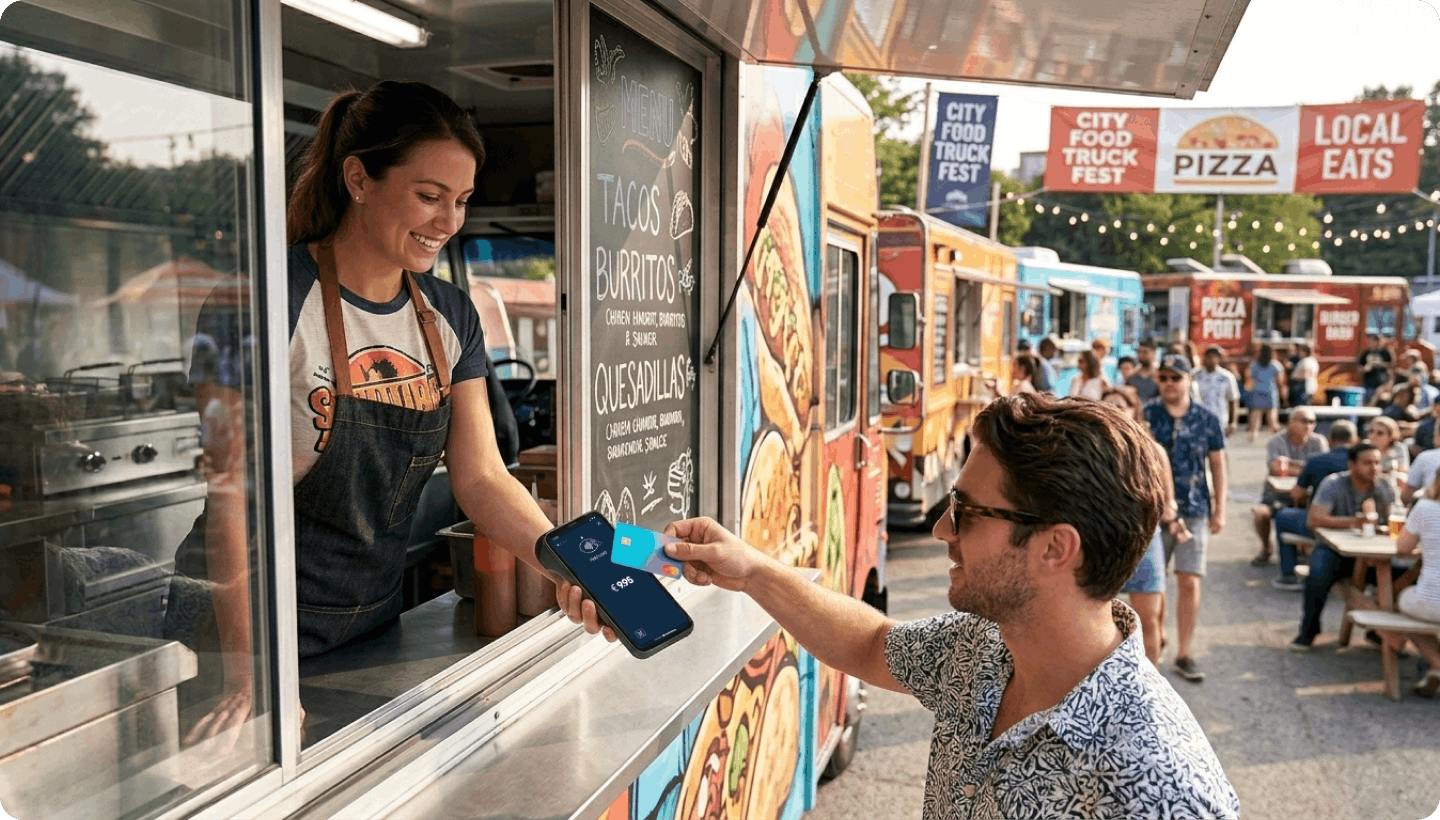
4. Food fairs and Food courts
Food fairs and food courts require a flexible and robust POS system that supports diverse payment methods and works seamlessly in dynamic, high-traffic environments with fluctuating connectivity. Key requirements include:
- Portability & Mobility: Mobile or tablet-based POS systems offer flexibility, allowing vendors to run seamlessly in various locations.
- Cash & Digital payments: Support multiple currencies and payment methods to cater to a diverse customer base.
- QR code ordering: Reduce queues by enabling customers to order from their smartphones, speeding up the service process.
- Offline mode: Ensure continuous operation even when internet connectivity is unstable, minimizing lost sales.
- Sales & Inventory tracking: Prevent stockouts and allows for effective management during peak periods, improving operational efficiency.
- Multi-Vendor integration: Consolidate reporting across multiple stalls through a cloud-based system, simplifying overall management for market operators.
Our recommended terminal: P3KH
The P3KH is built for fast, reliable transactions in dynamic environments. Its physical keyboard ensures speed and accuracy even in challenging weather conditions, while its robust connectivity and offline capabilities make it ideal for high-traffic food fairs and markets.
5. Music festivals and large-scale events
Large-scale festivals and live events create intense peaks in food and beverage demand, often with thousands of attendees purchasing within a short timeframe. In these environments, vendors need payment systems that reduce queues, support fully cashless operations, and maintain performance even under heavy traffic and limited connectivity. Key requirements include:
- Self-service ordering points: Self-service kiosks or ordering stations allow attendees to browse menus, place orders, and pay independently, reducing pressure on staff and shortening queues at busy food stands.
- Mobile ordering and payments: Event apps or QR-based ordering enable customers to order and pay directly from their smartphones, creating a “skip-the-line” experience that distributes demand more efficiently across vendors.
- High transaction capacity: Payment systems must process large volumes of transactions within a short timeframe, ensuring fast checkout even during peak moments between performances or activities.
- Cashless event environments: Supporting fully digital payments helps speed up service, reduce cash handling, and simplify reconciliation for vendors and event organizers.
- Reliable performance in crowded environments: With thousands of devices connected to the same networks, POS systems must maintain stable performance and offer offline capabilities to ensure transactions continue even with limited connectivity.
Our recommended terminals: P3 AIR + P3 MIX
The P3 AIR is ideal for mobility-driven service points thanks to its lightweight, durable design, while the P3 MIX supports more complex operations where hybrid fixed-and-mobile setups are needed. Together, they ensure maximum flexibility and uptime in high-pressure festival environments.
Supporting every Food & Beverage payment environment
From fine dining restaurants to fast-paced festivals and food courts, every Food & Beverage environment comes with its own operational challenges and payment expectations. The right SmartPOS setup can help businesses reduce friction, improve service flow, support staff mobility, and create faster, more seamless customer experiences.
MultiSafepay’s SmartPOS solutions are designed to adapt to a wide range of Food & Beverage business models, combining flexible payment acceptance, reliable connectivity, and seamless integrations into one scalable ecosystem.
Looking to optimize your payment setup? Explore our dedicated page to discover the devices, features, and payment capabilities designed to support modern Food & Beverage operations, whether you need countertop, portable, or fully mobile payment solutions.